

What if your team could communicate faster, collaborate better, and stay more engaged—without complicated tools or endless email chains? In a world where instant communication is the norm, businesses are constantly seeking ways to streamline how their teams connect and share information. Enter WhatsApp—an app most of us use daily to chat with friends and family. But did you know that it can also transform how your employees engage and collaborate at work? Whether you’re managing a global team or a small department, WhatsApp offers a simple yet powerful way to keep communication flowing and your team motivated. Let’s explore how this everyday app is revolutionizing employee engagement and internal communication for enterprises.
Why WhatsApp for Enterprise Communication?
With over 2 billion active users worldwide, WhatsApp is one of the most popular messaging platforms. It’s no surprise that many businesses are turning to this app not only for customer communication but also for improving internal communications. Here’s why:
- Instant and Real-Time Communication
In a fast-paced business environment, time is crucial. WhatsApp allows employees to send and receive messages instantly, ensuring that everyone is on the same page. Whether it’s sharing updates, making quick decisions, or resolving urgent issues, WhatsApp facilitates real-time conversations, unlike emails that often get delayed or buried in inboxes. - High Engagement and Familiarity
Employees are already familiar with WhatsApp as a personal communication tool. This familiarity increases engagement levels when it’s introduced for work purposes. Employees are more likely to check messages and stay responsive when using a platform they already use daily. - Group Chats and Broadcast Lists
WhatsApp makes it easy to set up group chats and broadcast lists, which are ideal for team communication. You can organize employees into different departments or teams, ensuring targeted communication. Broadcast lists also allow you to send messages to many employees at once without them seeing each other’s responses, keeping things professional.
Multimedia Sharing
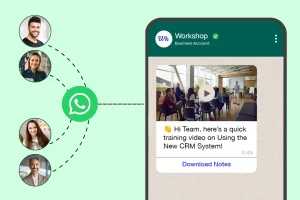
WhatsApp’s ability to send images, videos, voice notes, and documents enhances communication. Sharing training videos, promotional materials, or important updates is as simple as sending a text. This multimedia capability helps convey messages more effectively than plain text.
Benefits of WhatsApp Marketing for Employee Engagement
A Gallup study shows that organizations with higher employee engagement see 21% higher profitability and 17% higher productivity. By utilizing WhatsApp for effective internal communication, businesses can increase engagement and create more productive work environments. Now that we understand why WhatsApp is so effective for communication, let’s explore the specific ways it can enhance employee engagement.
1. Enhanced Collaboration Across Teams
- Real-time Collaboration: WhatsApp allows teams to collaborate instantly. Whether it’s a marketing department sharing creative assets, HR sending out new policy updates, or IT troubleshooting an issue, WhatsApp ensures everyone stays in the loop, no matter where they are.
- Cross-Department Communication: With large enterprises, communication between departments can sometimes be slow or disjointed. WhatsApp bridges this gap by providing a centralized hub for cross-functional teams to communicate seamlessly.
According to a survey by Frost & Sullivan , 69% of employees say they are more productive when using messaging platforms for team communication as compared to email. WhatsApp’s ability to facilitate real-time, informal conversations can enhance collaboration and quick decision-making.
2. Employee Recognition and Feedback
- Instant Praise and Recognition: Sending quick acknowledgments and praise can significantly boost employee morale. WhatsApp is the perfect tool for instant recognition. A simple “Great job!” message or a team-wide shoutout can go a long way in fostering a positive work culture.
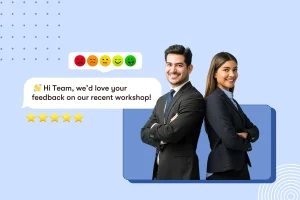
Instant Feedback: Employees can provide quick feedback on projects, events, or internal policies via WhatsApp. Instead of waiting for formal reviews or meetings, real-time feedback helps address concerns faster and improve overall performance.
3. Improved Training and Development
- Sharing Learning Resources: WhatsApp allows enterprises to distribute training materials efficiently. You can send employees training videos, eBooks, or important documents directly through WhatsApp, making learning more accessible.
- Microlearning: For busy employees, microlearning (short, bite-sized learning experiences) can be delivered through WhatsApp messages. A short, daily tip or a quick tutorial can significantly enhance employee development without overwhelming them.
4. Employee Polls and Surveys
- Quick Polls for Engagement: WhatsApp’s built-in polling feature allows managers to ask quick questions and gauge employee sentiment. This is a great way to involve employees in decision-making or simply to check the pulse of the team.
- Surveys for Insights: Businesses can use WhatsApp to send out short surveys and get feedback from employees on various aspects of their work experience. The informal nature of WhatsApp encourages more participation and honesty.
Practical Examples of WhatsApp Marketing in Enterprises
Here are some real-world examples of how enterprises are effectively using WhatsApp to engage employees and improve internal communication:
- Zappos – A global leader in customer service and employee satisfaction, Zappos uses WhatsApp to engage its employees in team discussions, training sessions, and quick updates on company news. By keeping communication fast and fluid, they ensure employees are always on top of any changes or opportunities.
- Walmart – As one of the world’s largest employers, Walmart has implemented WhatsApp as a tool for real-time communication among employees. Store managers can instantly update their teams on stock levels, new product arrivals, and promotions. This has not only improved operational efficiency but also increased employee responsiveness.
- Netflix – Netflix uses WhatsApp to enhance communication among remote teams and to keep employees engaged with corporate initiatives. The company often shares behind-the-scenes content, upcoming events, and employee achievements through WhatsApp groups, fostering a sense of community and inclusion.
Best Practices for Implementing WhatsApp for Enterprise Marketing
To fully harness the power of WhatsApp for employee engagement and communication, here are some best practices to keep in mind:
1. Maintain Professionalism
While WhatsApp is a casual app, ensure that the tone and content of workplace communication remain professional. Set clear guidelines on what is appropriate to share, especially in group chats.
2. Ensure Data Security
Use WhatsApp Business features to ensure data security, such as two-step verification and encryption. Protect sensitive company information and ensure that communication complies with GDPR and other privacy regulations.
3. Use Automation Where Possible
Leverage WhatsApp Business API to automate certain tasks, such as sending welcome messages, handling common employee queries, or sending scheduled updates. This can free up HR or communication teams for more strategic tasks.
CHECK OUT: Bowaba’s WhatsApp Business API/CRM Service
4. Create Separate Work and Personal Accounts
Encourage employees to use separate WhatsApp accounts for work and personal use. This helps maintain boundaries and ensures that work communication doesn’t become overwhelming.
5. Measure Engagement
Use analytics tools to track how well your WhatsApp messages are being received. Monitor response rates, participation in polls, and the time employees spend interacting with the content to continually improve engagement.
WhatsApp Marketing for Employee Engagement and Communication
As enterprises continue to look for ways to foster employee engagement and streamline communication, WhatsApp is proving to be a valuable tool. It offers real-time, direct communication, boosts collaboration, enhances employee recognition, and simplifies training. By using WhatsApp strategically, businesses can create a more connected and engaged workforce.